
Best badminton rackets for beginners (2026)
Six rackets that actually help a new player improve. Picked by shaft flex, weight, balance, and budget — not by marketing language.
By Rui Su · Founder, IntoBadminton · Div 4 Ireland · trained under former Malaysia national and China provincial-team coachesUpdated
Disclosure: Some outbound retailer links may be affiliate links. They never change editorial order or fit scores. Affiliate policy
How beginners should think about a first racket
Three things matter more than brand or marketing tier: shaft flex (medium or flexible — extra-stiff frames punish late contact), weight class (4U or 5U keeps the frame easy to time), and balance (even or slightly head-light protects your shoulder while you build technique). Get those three right and you will improve faster than someone with a $300 pro frame.
| Weight | Balance | Shaft flex | Best for | |||||
|---|---|---|---|---|---|---|---|---|
| #1 | Yonex Nanoflare 700 Play | ~$80 | 4.3 | 72 | 4U | Head-light | Hi-Flex | First serious club racket — speed leaning |
| #2 | Yonex Astrox 77 Play | ~$100 | 4.0 | 68 | 4U (~83g) | Head-heavy | Hi-Flex | Beginner who wants Astrox attack feel |
| #3 | Yonex Arcsaber 7 Pro | ~$220 | 4.3 | 5 | 4U | Even | Medium | Beginner planning to stay 2-3 years |
| #4 | Victor DriveX 8S | ~$189 | — | 72 | 4U | Even | Medium | Beginner who likes flat doubles drives |
| #5 | Yonex Astrox 77 Pro | ~$219 | 4.3 | 68 | 4U | Head-heavy | Medium | Ambitious club player |
| #6 | Mizuno Altius N-Feel | ~$169 | — | 64 | 4U | Even / head-light | Medium | Beginner who wants something different |
Finder fit scores use the reference club doubles profile. Take the quiz for your shortlist.

Image: Yonex (us.yonex.com) #1 · Yonex
Nanoflare 700 Play
~$80street estimate
Best for: First serious club racket — speed leaning
- Weight
- 4U
- Balance
- Head-light
- Shaft flex
- Hi-Flex
Why this pick: The beginner-tier sibling of the Nanoflare 700 Pro that singles and doubles players use on the BWF tour. Hi-Flex shaft loads forgiving, the head-light bias makes the frame easy to recover with on flat-drive exchanges, and the 4U weight keeps it light on the shoulder. Standard 20-28 lb stringing window covers everything a beginner needs.
Tradeoff: Less rear-court smash mass than the Astrox 77 Play below — pick this if speed and defense matter more than overhead attack.
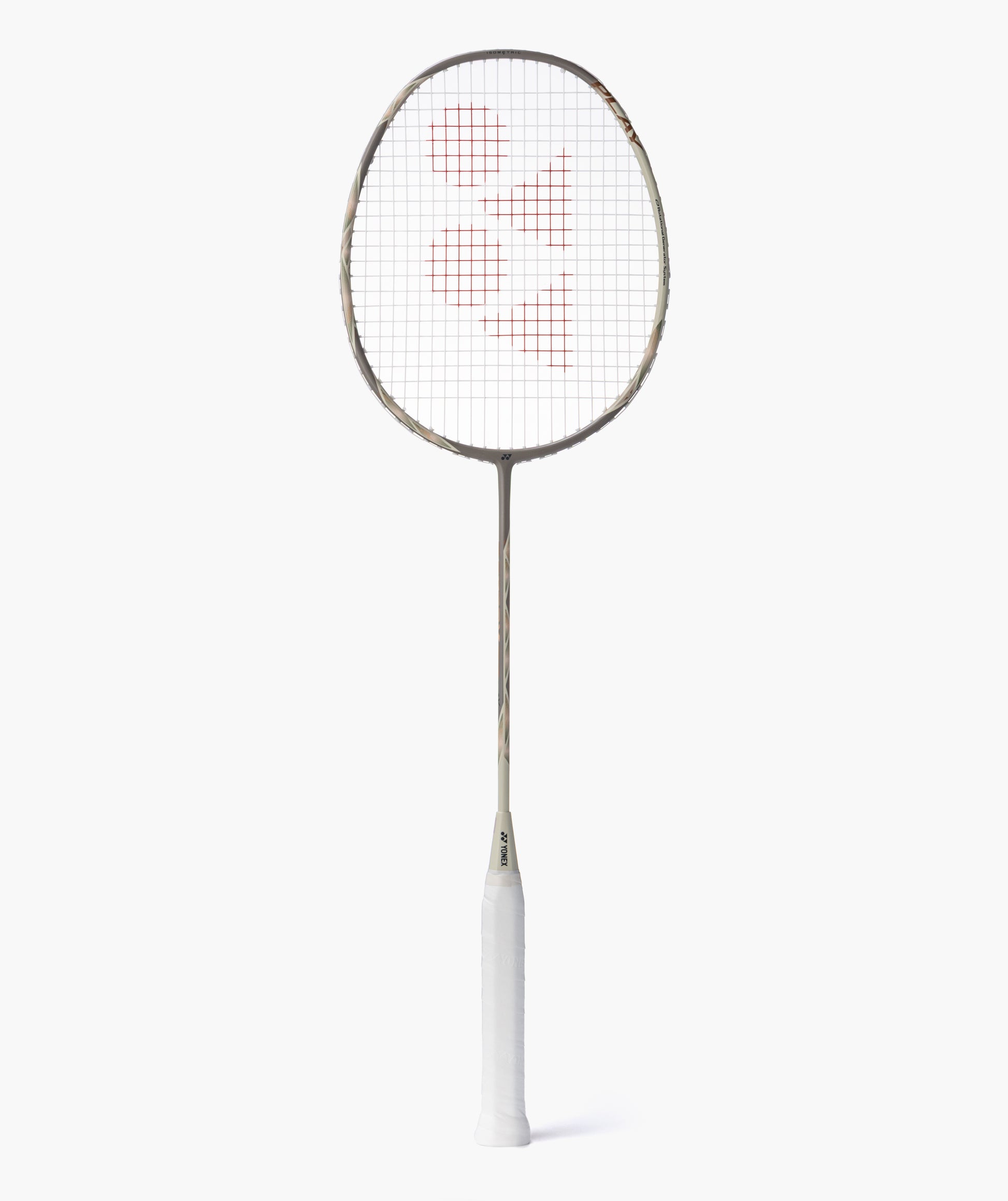
Image: Yonex (us.yonex.com) #2 · Yonex
Astrox 77 Play
~$100street estimate
Best for: Beginner who wants Astrox attack feel
- Weight
- 4U (~83g)
- Balance
- Head-heavy
- Shaft flex
- Hi-Flex
Why this pick: The friendliest path into Yonex's head-heavy Astrox line. Hi-Flex shaft tolerates imperfect timing, but the head-heavy bias still teaches you what an Astrox feels like before you commit to the 77 Pro further down this list. Same Rotational Generator System geometry as the Pro, just dialled for first-year players.
Tradeoff: Less defensive recovery than the Nanoflare 700 Play above — head-heavy frames slow your reset on fast-flat exchanges.
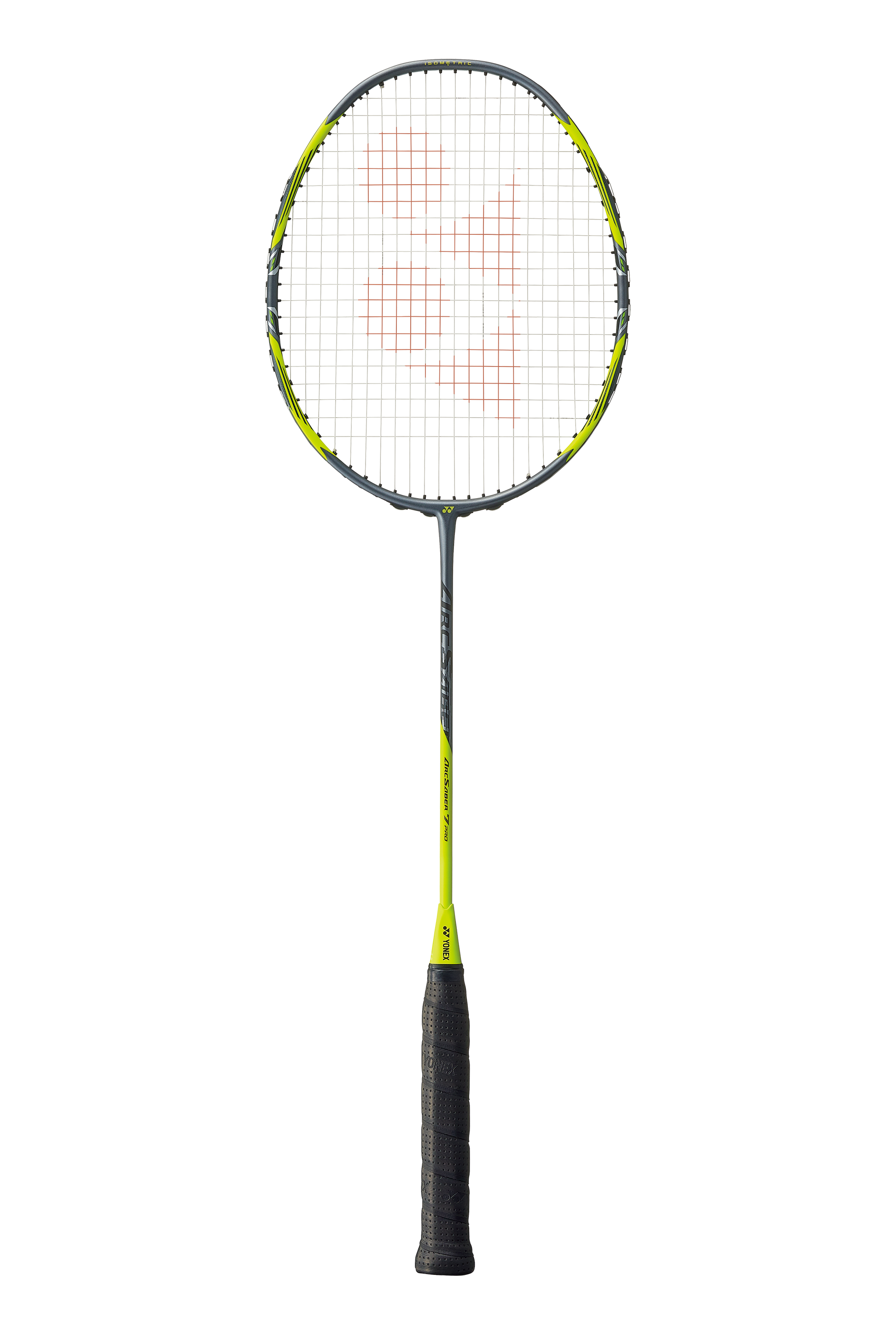
Image: Yonex (us.yonex.com) #3 · Yonex
Arcsaber 7 Pro
~$220street estimate
Best for: Beginner planning to stay 2-3 years
- Weight
- 4U
- Balance
- Even
- Shaft flex
- Medium
Why this pick: An honest all-court frame with a forgiving shaft. The Arcsaber line is engineered around control, so beginners learn placement before they chase smash speed. Worth the spend if you are committed.
Tradeoff: Premium tier — overkill if you are still deciding whether badminton is your sport.
Image: Victor (victorsport.com) #4 · Victor
DriveX 8S
~$189street estimate
Best for: Beginner who likes flat doubles drives
- Weight
- 4U
- Balance
- Even
- Shaft flex
- Medium
Why this pick: Victor's DriveX series is tuned around flat-drive doubles play. The 8S is light enough to defend with and stiff enough to teach proper contact, without the price tag of an Auraspeed Pro.
Tradeoff: Less brand awareness in North America — string and grip swap on local stringer is fine.

Image: Yonex (us.yonex.com) ~$219street estimate
Best for: Ambitious club player
- Weight
- 4U
- Balance
- Head-heavy
- Shaft flex
- Medium
Why this pick: Often called the friendliest 'Pro' frame Yonex makes. Forgives mishits a 88D Pro punishes, with enough head weight to start training rear-court attack. Founder's previous main racket — confirmed transition-friendly.
Tradeoff: If your level is still strictly recreational, the 77 Pro under-performs vs the cheaper 77 Play above.

Image: Mizuno Japan #6 · Mizuno
Altius N-Feel
~$169street estimate
Best for: Beginner who wants something different
- Weight
- 4U
- Balance
- Even / head-light
- Shaft flex
- Medium
Why this pick: Mizuno's badminton line stays under the radar outside Japan, which is a shame. The N-Feel swings smooth, sits gentle on the arm, and the build quality matches anything in the Yonex mid-range. A good pick if you want to step off the Yonex-Victor-Li-Ning treadmill without taking a quality risk.
Tradeoff: Limited availability outside Asia. Check regional stock before ordering — most stockists are in Japan, mainland China, and a handful of Singapore/Malaysia shops.
Frequently asked
What weight class should a beginner choose, 3U, 4U, or 5U?+
5U (around 75-79g) is the easiest to time and the lightest on the shoulder. 4U (around 80-84g) gives slightly more punch on smashes once your contact point is consistent. 3U is overkill for most beginners — only choose 3U if you already lift weights, have wrist issues with light frames, or specifically want a head-heavy attack feel.
Should I buy the same racket as my favourite pro?+
Almost never. Pro rackets are tuned around extreme stiffness, demanding swing weights, and unforgiving sweet spots. A beginner copying Viktor Axelsen's Astrox 100ZZ will get worse smash distance than the same beginner with a Nanoray 70i — and tennis elbow within a month.
Do I need a separate racket for singles and doubles?+
No, not as a beginner. One forgiving all-court frame covers both. The split between attack and speed rackets matters once you have a clear primary discipline and your technique reliably produces clean contact.
How much should a first racket cost?+
$80-150 USD covers excellent options. Spending more than $200 on a first racket is usually wasted — you do not yet know whether you prefer head-heavy attack or head-light speed, and you may swap before you have logged 50 sessions. Spend the saving on shoes — they matter more.
Want a personalised pick instead of a list?
The finder asks five quick questions — level, discipline, style, body, budget — then ranks the catalogue for you with reasons.